One year after its launch at COP30 in Belém, Building for Forests returned to the UN Climate Change Conference with a clearer picture of the progress being made to connect sustainable forest management with better buildings.
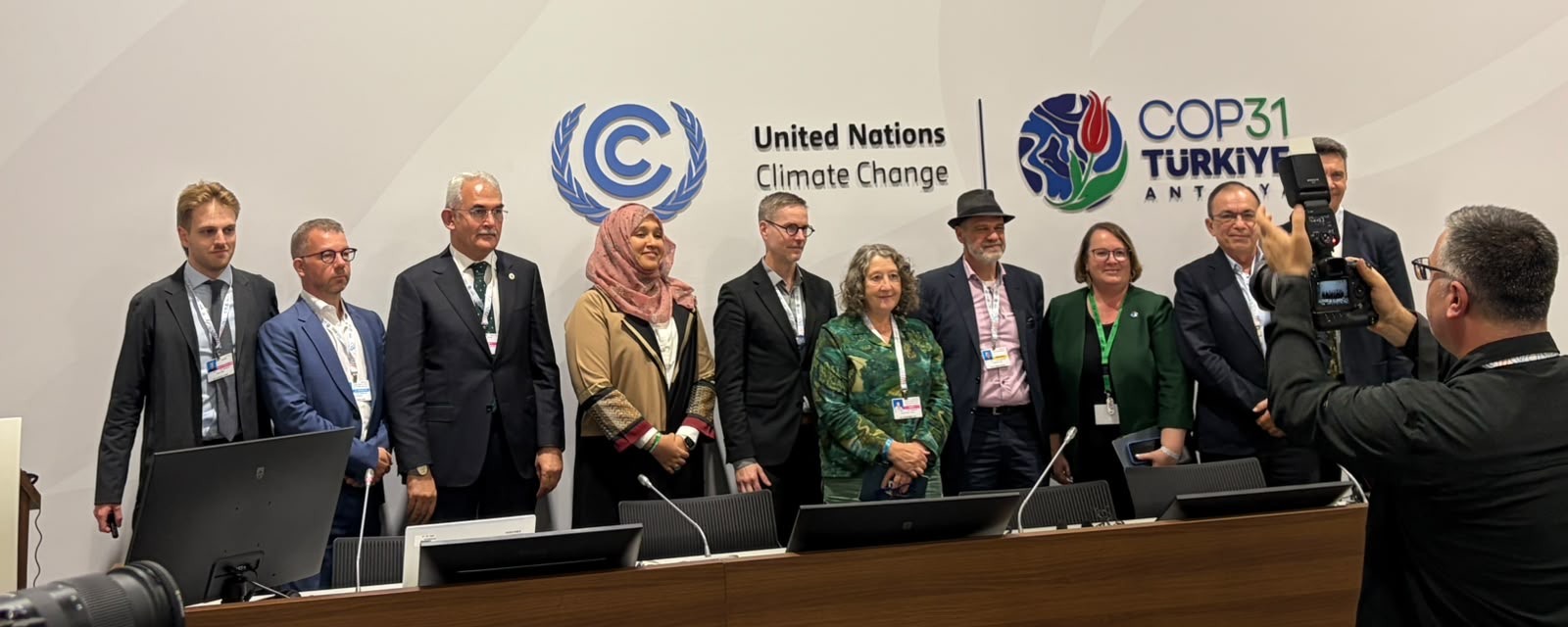
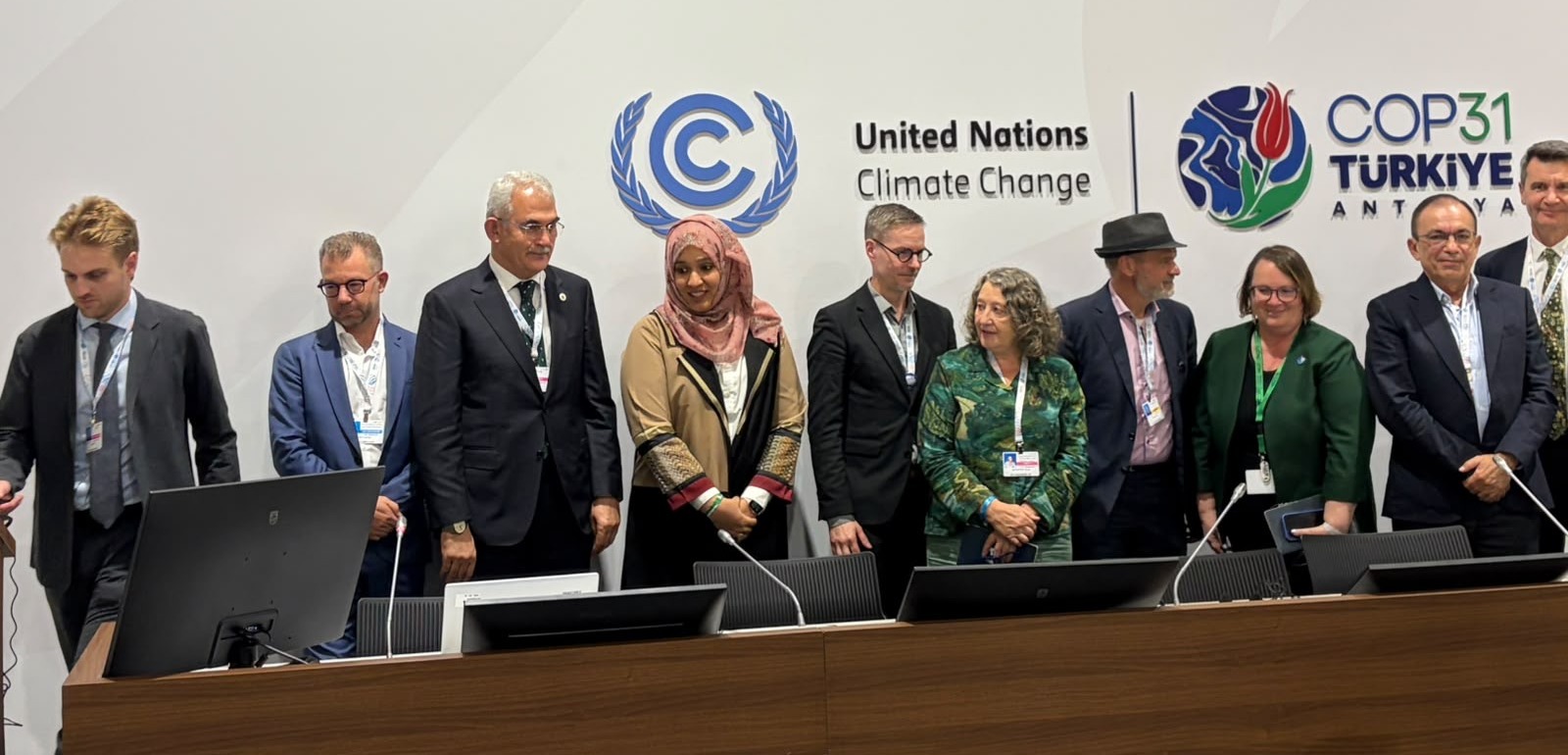
At an official UNFCCC side event in Antalya on 9 November, government representatives, international organisations, cities, researchers, architects and manufacturers shared practical experiences and explored what is needed to advance affordable, resilient and low-carbon construction while supporting healthy forests.
The event, Building with Forests: Advancing Forest-Positive Construction, was organised by Built by Nature and PEFC International.
Opening the discussion, Harry Mills, representing the Climate Champions Team and Built by Nature, recalled that Building for Forests was launched as a plan to accelerate solutions, not another pledge. Its purpose is to connect existing commitments, expertise and initiatives, helping translate them into practical cooperation.
Dan Ioschpe, COP30 Climate High-Level Champion, reinforced the importance of continuity from COP30 to COP31 and recognised Building for Forests as an example of how the global climate action agenda can support implementation.
Progress across countries and cities
The discussions highlighted how governments are increasingly connecting responsible timber construction with broader housing, climate and economic development priorities.
Introducing the government panel, Peter Graham of the Forest and Climate Leaders’ Partnership (FCLP) presented the Building for Forests COP31 Success Package as a snapshot of progress across policies, responsible supply chains and practical implementation.
Türkiye’s Director General of Forestry, Bekir Karacabey, outlined investments in modern timber buildings, including facilities in earthquake-affected regions. Türkiye also recently endorsed the Principles for Responsible Timber Construction, reinforcing the importance of responsible forest management alongside greater use of wood.
In Costa Rica, Jaime Sotela described progress on technical codes for timber construction and embodied carbon, supported by cooperation between government, industry and professional organisations.
Kenya is connecting sustainable construction with affordable housing, industrial development and employment. Nasra Nanda highlighted efforts to align forestry and housing policies, including work on green building requirements and public procurement.
Ruth Davis, the United Kingdom’s Special Representative for Nature, emphasised opportunities to connect sustainable housing with local jobs, skills and rural development. Matti Kuittinen of Finland and Elfriede More of Austria contributed perspectives on research, policy frameworks and international cooperation.
These developments illustrate how responsible timber construction is becoming part of wider national priorities, rather than remaining a separate environmental initiative.
Cities are also moving towards broader implementation. Simone Mangili, Executive Director of the Carbon Neutral Cities Alliance, described how municipalities are advancing procurement strategies, material requirements and cooperation across city networks to support lower-emission construction.
Connecting solutions across the building value chain
The second discussion, moderated by Paul King, CEO of Built by Nature, placed these developments within the wider challenge of delivering adequate and affordable housing.
With more than a billion new homes expected to be needed globally by 2050, the way buildings are designed, constructed and supplied with materials will have far-reaching consequences for people, climate and natural resources.
Contributions from industry and research highlighted both the opportunities and the conditions needed for wider adoption.
Erich Wiesner, CEO of WIEHAG, emphasised the existing manufacturing capabilities for modern timber construction, while pointing to the need for supportive policy frameworks and economic incentives.
Andrew Waugh, founding director of Waugh Thistleton Architects, reinforced the importance of government leadership, including regulation and public procurement.
Florian Kraxner of IIASA and the Science and Timber Construction Alliance (SITCA) explored how sustainable forest management and long-lived timber products can contribute to climate mitigation and carbon storage in buildings.
The discussion also emphasised that responsible construction must respond to wider social and environmental priorities.
Anacláudia Rossbach, Executive Director of UN-Habitat, highlighted the importance of affordable, resilient and adequate housing, while Amy Duchelle of FAO described opportunities to connect sustainable forest management with wood-based value chains, local livelihoods and urban development.
Together, these contributions illustrated the importance of aligning forest management, industrial capacity, building policies, finance and housing needs.
The value of bringing different perspectives together
One of the distinctive features of Building for Forests is its ability to connect organisations and stakeholders who approach these challenges from different perspectives.
Governments shape policy, cities influence demand, industry develops solutions, researchers provide evidence, and forest owners manage the resources on which responsible wood construction depends.
Their objectives are closely connected, even where their responsibilities and priorities differ.
Reflecting on the discussions, Thorsten Arndt, Head of Advocacy at PEFC International, drew on the experience of forest certification, where bringing different interests together has been central to developing shared approaches to sustainable forest management.
Arndt emphasised that lasting solutions do not require everyone to think alike. They depend on listening to different interests, finding common ground and developing approaches that work in practice.
The same principle is relevant to Building for Forests. Connecting expertise and experience across sectors creates opportunities to address challenges that individual organisations cannot resolve alone.
The initiative provides a platform for strengthening those connections and supporting cooperation between forests, materials, housing and urban development.
Building on the momentum beyond COP31
The COP31 discussions demonstrated the breadth of experience, expertise and political interest available to advance responsible timber and other biobased construction.
They also highlighted the importance of maintaining affordability, resilience, responsible sourcing and sustainable forest management as solutions develop.
In the closing reflection, Neil Khor, Special Adviser to the COP31 Climate High-Level Champion, reinforced the importance of affordability and inclusion, while highlighting opportunities to connect Building for Forests with the wider climate action agenda, including circularity and resource efficiency.
The next phase offers opportunities to strengthen cooperation across national policies, city-level initiatives, investment, skills and responsible supply chains, building on progress already underway.
As Arndt concluded:
“It is an achievement to bring all of those people together, but what we all achieve together, that’s what matters.”
That is the ambition of Building for Forests as it looks towards COP32 and beyond: to connect existing efforts and help translate cooperation into better homes, lower emissions and lasting benefits for forests and the communities that depend on them.